Grade Level
9-12
Duration
Materials
Media
Lesson Objectives
Introductory Activity
Lesson Process
Vocabulary
Resources
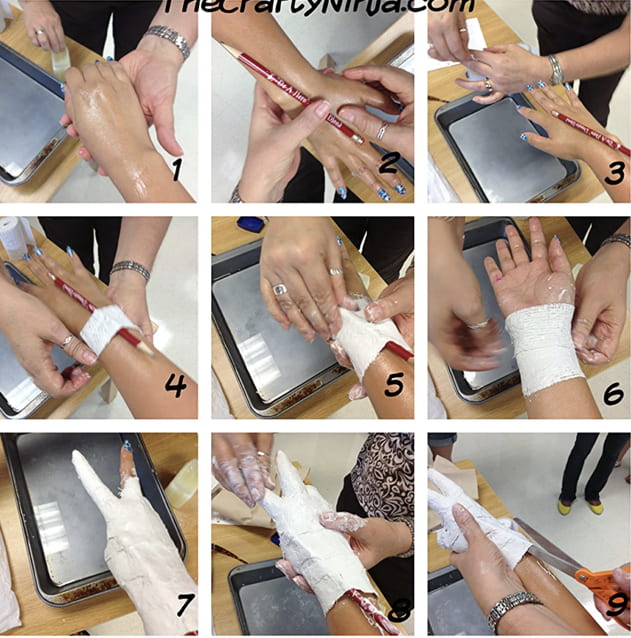
In this project, you will create a plaster gauze relief mask of yourself or a famous celebrity. This is not necessarily a realistic reproduction of the person. You will express qualities of your personality or a celebs, using the mask, at least one plaster hand and other media to create a reflective sculpture.


Art History
For the nineteenth-century sculptor Auguste Rodin, clay was the perfect medium in which to plan his major works. His figurative pieces were begun most often by working directly in clay in front of live models. He used clay as a means of sketching. From the clay model, he created a plaster mold and from there a plaster cast. He would not move to plaster, however, until he was completely satisfied with the clay model. Sometimes the process involved returning again and again to the live models as he reworked movements, gestures, and positions in clay.


The Thinker
The seventeenth-century sculptor Gian Lorenzo Bernini had a knack for capturing both the appearance and the personality of his subjects. It is said that he followed them around and took notes before doing a portrait. Bernini’s work reflects the “naturalistic” style prevalent in architecture of the Baroque period in Europe. In his bust of Francesco I d’Este, Bernini created a likeness of a young man with long, curling hair, two thick locks of which descend over his chest. The head and line of sight turned to the viewer’s left contrast with the implied movement of lines and forms in the cape to the right. They provide a feeling of momentary action – a moment in time caught forever. While a sculpture is a static form, the artist has purposefully suggested movement to make the work more vital, more interesting.

Gian Lorenzo Bernini
Francesco I d’Este, c. 1651
https://www.gallerie-estensi.beniculturali.it/en/works-of-art/bust-of-francesco-i-deste/